
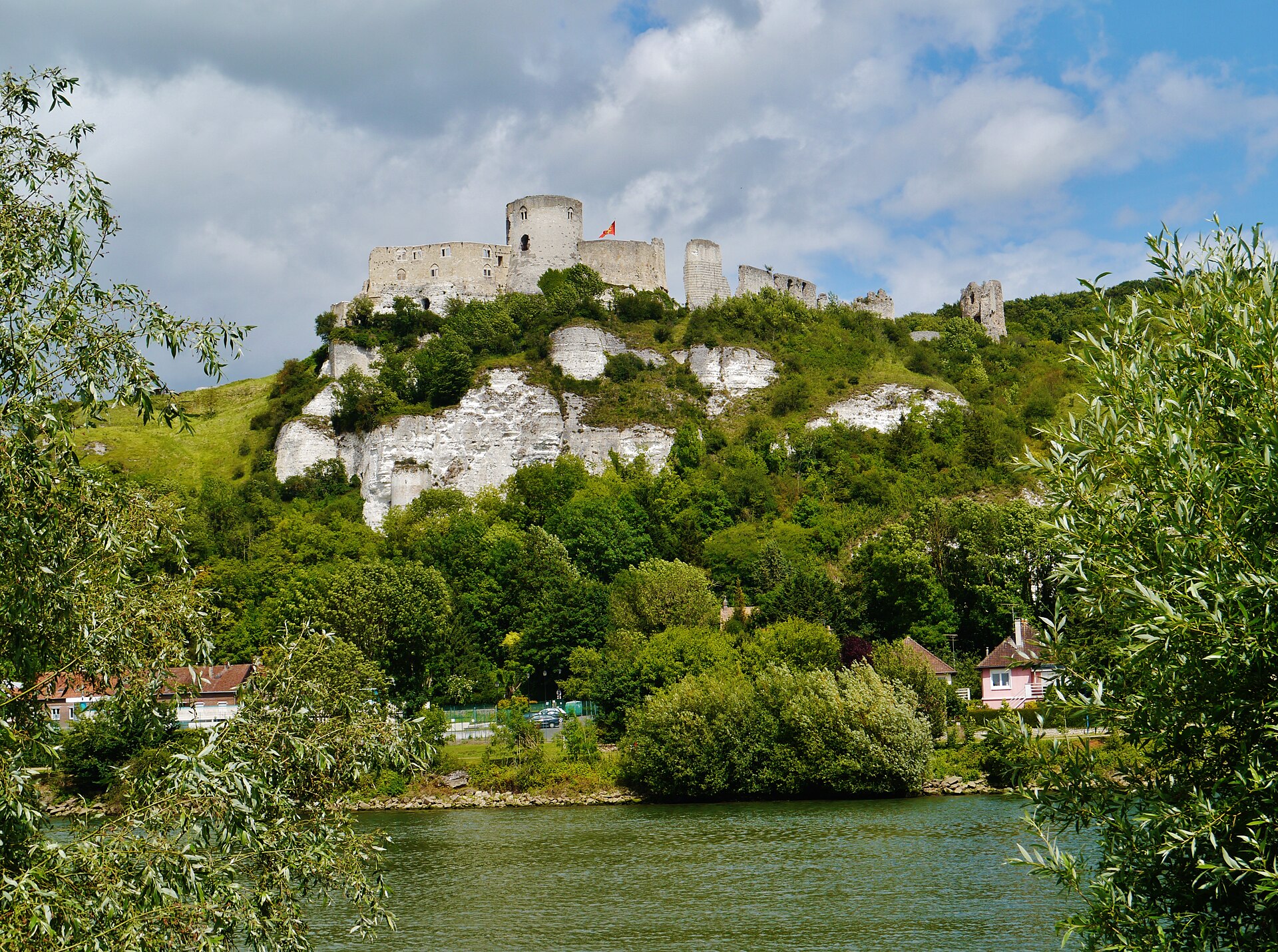

A Normandy castle is rarely just a building. It is a defensive idea turned into stone, from a duke’s fortress to an abbey on a tidal island. This guide explains the history behind the region’s strongholds and how to pick a lodging with real character.
Why does Normandy have so many castles?
Normandy grew from Viking settlement. Scandinavians were permanently settled there before 911. That year, the Viking leader Rollo struck a deal with King Charles the Simple of France. Rollo gained the county of Rouen. The lands around Rouen became the core of the later duchy.
A duchy needed to defend itself. It also needed to prove its power. Fortresses did both jobs.
The dukes did not rule in peace for long. William inherited the duchy as a child. Nobles fought each other for control of the young duke. Others pursued their own ends.
This explains the landscape. Strongholds were not decoration. They were tools for holding territory, and they shaped where towns grew.
What did William the Conqueror build, and why does it matter?
William was born around 1028 at Falaise. He became Duke of Normandy in 1035. By about 1060, after a long struggle, his hold on the duchy was secure. In 1066 he crossed to England and won at Hastings.
Castles were central to what came next. His reign in England saw many castles raised. It also saw a new Norman nobility settled on the land. He died in September 1087 and was buried in Caen.
For you as a traveler, the lesson is simple. A castle is a statement of authority. Its shape follows its purpose. Walls, towers and approaches were all planned around control.
That is also why castle design feels so different from a Goff interior. One is built to hold a line. The other is built to remove it. Seeing both in a single trip sharpens your eye for each.
Why is Mont-Saint-Michel the castle everyone pictures?
Yet it behaves like a fortress, and many visitors file it under castles.
The island sits roughly one kilometre off the north-western coast. It lies where the Couesnon River meets the sea. At low tide, pilgrims could reach it. That same position made it defensible, because the returning tide could strand or drown anyone approaching on foot.
The record backs this up. The island was never conquered in the Hundred Years’ War. A small garrison fought off a full English attack in 1433. Louis XI saw the value of this natural defence and turned the site into a prison.
The site was added to the UNESCO World Heritage list in 1979. More than three million people visit each year. Outside Paris, no French attraction draws more.
Plan for the crowds. Plan for the tide too. Crossing the sands from the neighbouring coast can still be dangerous, so use the bridge.
How do you choose a castle-inspired stay with real design?
Start with what you want to feel. A fortress mood and a playful mood are different trips. Decide first.
Then check these points before you book:
- Whether the building is a genuine historic structure or a later reinterpretation.
- How you reach it, and whether access depends on tides, weather or season.
- What the rooms actually look like, not only the exterior.
- How heating, stairs and narrow passages affect comfort.
- What the host says about the building’s history and any limits on use.
Ask direct questions. Good hosts answer them without hesitation.
Old stone holds cold. Pack layers, even in warm months. Bring sturdy shoes for uneven floors and steep steps.
Finally, leave room in the schedule. A castle rewards slow looking. Rushing wastes the point of staying somewhere unusual.
Frequently asked questions
Is Mont-Saint-Michel a castle or an abbey?
It is an abbey on a tidal island. It acted like a fortress because the sea protected it, and it later served as a prison. Many travelers still group it with Normandy’s castles.
When did Normandy begin as a political unit?
Scandinavians were permanently settled there before 911. That year Rollo and King Charles the Simple of France came to terms over the county of Rouen. The lands around Rouen formed the core of the later duchy.
Is it safe to walk to Mont-Saint-Michel across the sands?
It can be dangerous. Tides there change a great deal, and the sands are hazardous. Use the bridge unless you are with a qualified guide.
What should you pack for a stay in an old stone building?
Pack warm layers and sturdy shoes. Old stone holds cold, and floors and stairs are often uneven. Bring a small light for dim passages.
Related reading
- Top Mistakes to Avoid When Booking a Stay in Quirky Architecture
- Top Destinations to Immerse Yourself in Bruce Goff-Inspired Lodging
Sources
- Mont-Saint-Michel (en.wikipedia.org, accessed 2026-11-04)
- William the Conqueror — Wikipédia (en.wikipedia.org, accessed 2026-11-04)
Photo: Les Andelys Château Gaillard 03, by Zairon, CC BY-SA 4.0 (Wikimedia Commons)

