
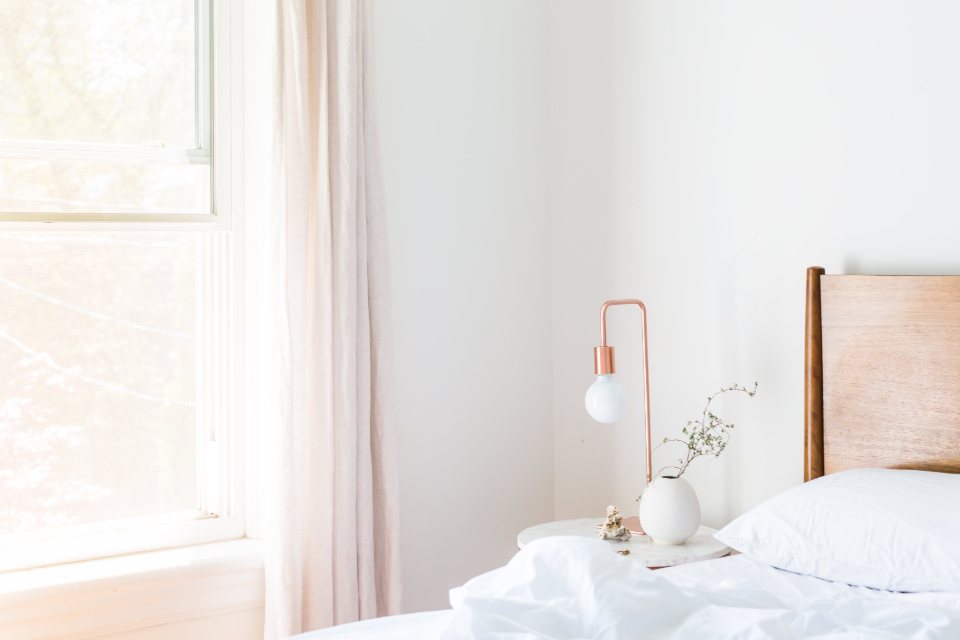

People book a night in a spiral, a dome, a tower or a house with no right angles because they want to see it. What they rarely plan for is that they will also have to sleep in it, and sleep is where unusual geometry stops being a photograph and becomes a physical experience. Sound travels differently, light arrives from unexpected places, warm air pools where you did not expect it, and your body, which has spent a lifetime in boxes, spends the first hour recalibrating. This article is about that first hour, the night in between, and the last morning, and about how to pick a design-led stay whose oddness suits you.
The first hour: your body maps the room
Walk into a rectangular bedroom and you know its size before you have looked at it. Walls meet at ninety degrees, the ceiling is flat and roughly eight feet up, and the bed sits against one wall. Your brain has a template for this and fills in the rest. Walk into a round room, a wedge-shaped loft or a space where the ceiling rises from six feet at one edge to eighteen at the other, and the template fails. Guests report the same reactions in the first hour: they pace, touch the walls, look up more than usual, and misjudge distances, bumping a shoulder on a sloping beam they had already noticed.
This is not a flaw in the house. It is the feeling of a spatial map being built from scratch, which is exactly what a design-led stay offers and an ordinary hotel room does not. The practical advice is simple: arrive in daylight if you can, unpack slowly, and find the light switches and the route to the bathroom before dark, because you will not be able to navigate the room from memory the first night.
Sound: rooms without parallel walls
Ordinary rooms have a recognizable acoustic signature. Two parallel hard walls produce a quick flutter echo, and a flat ceiling over a flat floor does the same, so we are used to a slightly boxy sound that our ears filter out. Remove the parallel surfaces and the signature changes. A curved wall behind the bed can focus sound toward a point, so that a dripping tap or a partner’s breathing seems closer than it is. A tall conical or domed ceiling can produce a faint, long reverberation in which footsteps upstairs hang in the air for a fraction of a second longer than expected.
Materials matter as much as shape. Stone, glass and polished concrete reflect; timber, cork, carpet and feathers absorb. Bruce Goff knew this when he ran carpet up the walls of houses and lined a ceiling with goose feathers at the Shin’enKan in Bartlesville. A stone spiral with a hard floor will be lively; a timber dome with rugs will be quiet, sometimes unnervingly so. Light sleepers should ask what the bedroom walls and ceiling are made of, not just what shape they are, and pack earplugs regardless, since irregular houses are often in irregular places, with wind, birds and creeks close by.
Light: where the sun comes from
A conventional bedroom has a window on one wall and curtains that close. Unusual houses tend to put glass where the geometry suggests it: a strip between wall and roof, a skylight at the apex of a dome, a clerestory that follows a spiral, a whole east-facing wall. That is what makes the space beautiful at four in the afternoon, and what wakes you at dawn. In Oklahoma the sun rises before 6:30 in the morning in June and after 7:15 in December, and a skylight admits it whichever way the bed faces.
Light at the wrong moment is the single most common complaint about sleeping in a design-led house, ahead of noise and temperature. It is also the easiest to plan for. Ask whether the sleeping area can be darkened, look at the floor plan for glazing with no obvious blind, and bring a sleep mask. Then notice, on the second morning, that the same glass which woke you early is what makes the room glow, and that you probably came for the glow.
Heat, air and height
Warm air rises, and a tall room stores it near the top. In a house with a single high space and a sleeping platform hung or stacked inside it, the loft is the warmest spot in the building, often by several degrees Fahrenheit relative to the floor. In summer that means a sleeping loft under a roof needs a fan, an openable high window or both; in winter it means the loft is the best bed in the house while the floor level stays cool. Rooms with a great deal of glass swing further in temperature over a day than rooms with thick stone walls, which lag behind the outside air by hours and give a steady, cave-like night.
Guests notice this only after the first night, usually as a blanket kicked off at two in the morning or a chill at five. Ceiling fans, cross ventilation and heavy walls are the three things worth asking about.
The last morning
Something predictable happens on the last morning of a stay in an unusual house. The room that seemed strange on arrival has become legible. You know where the low beam is, you have stopped hearing the creek, and you woke naturally with the light rather than being ambushed by it. Guests describe a small reluctance to leave that has less to do with comfort, which was often mixed, than with having learned a space. That learning is the actual product of a design-led stay. A conventional room gives you nothing to learn; a spiral or a dome gives you a shape you now carry in your body.
Notice what you liked and what you merely tolerated; that is what makes the next booking better than the first.
Choosing a stay that suits you
Design-led stays are not interchangeable, and the most photogenic is not always the one you will sleep best in. Before booking, work through a short list of questions and be honest about the answers.
- Are you a light sleeper? Favor timber, rugs and thick walls over stone, glass and open plans, and ask about the bedroom’s distance from the main living space.
- Do you wake with the light? Check for skylights and clerestories with no blinds, and choose a bedroom facing west or north if you want to sleep past sunrise.
- Do you run hot or cold at night? Lofts and glass rooms swing; ground-level rooms in stone or earth stay steady.
- Do you need a flat floor and a normal staircase? Ladders, stepping stones over indoor water and spiral stairs are common in this kind of house and are hard to manage half asleep.
- How many nights? One night is a visit; two or three is when the room stops being strange, which is usually the point.
Choose the geometry you want to learn, not just the one you want to photograph, and the first hour and the last morning will both be worth the trip.
